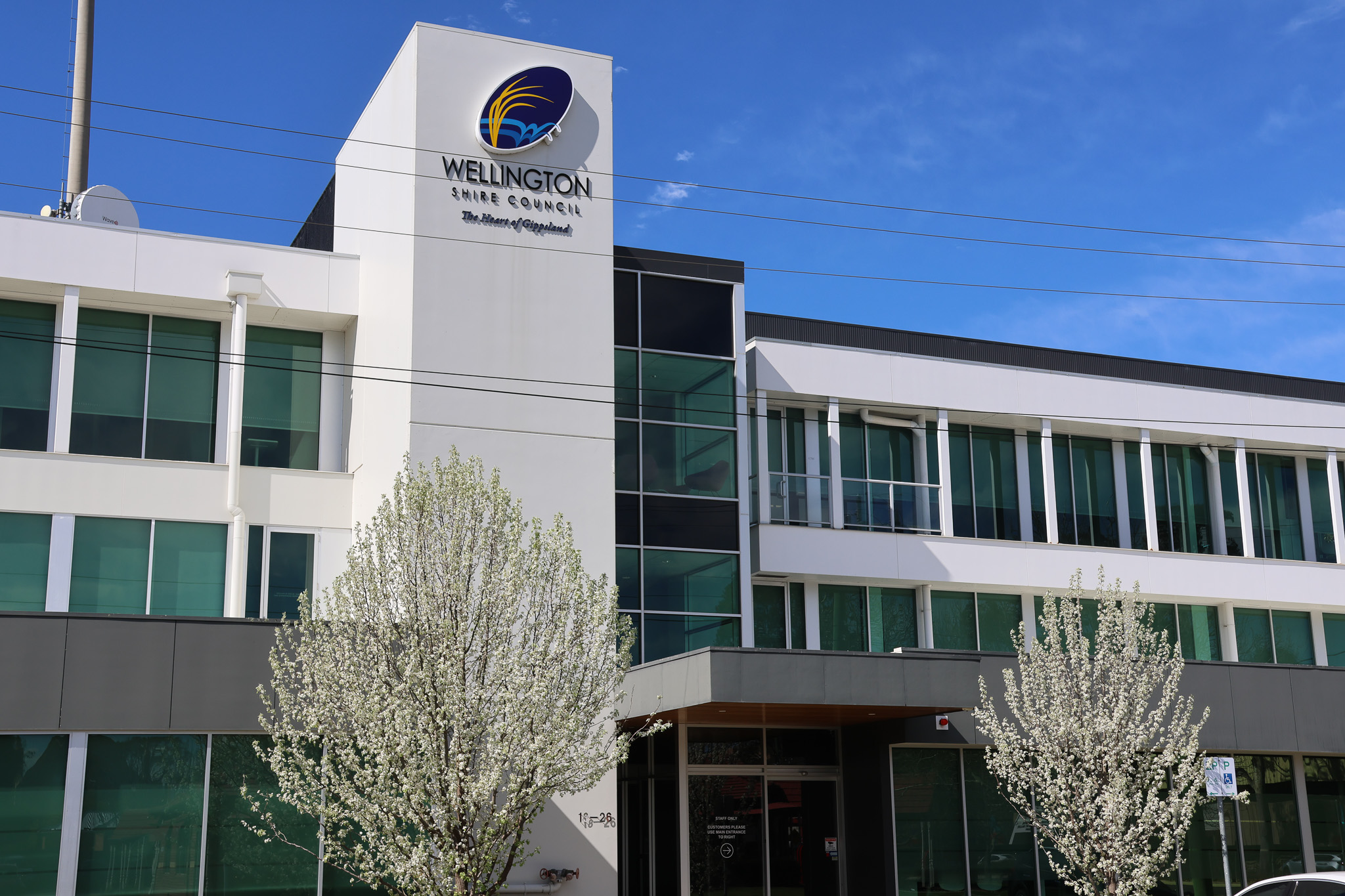
Wellington Shire Council has released its draft 2026-27 budget, outlining what it called a measured and responsible approach to managing rising costs, while continuing to deliver the essential infrastructure and services the community relies on.
The draft budget is now available to public comment.
According to council, the draft budget, tabled at last night’s meeting, reflected another year of financial restraint, with it focused on careful spending and ensuring any efficiencies, savings or benefits were passed onto ratepayers wherever possible.
For the 2026-27 financial year, council has allocated $59.1 million to its capital works program, with $43.6 million funded through council operations and a further $15.6 million supported by grants and external contributions. Securing external funding remains critical, particularly as councils are increasingly required to deliver more services while receiving proportionately less funding.
Roads and drainage continue to represent council’s largest area of capital investment, with $22.7 million allocated to road resealing and re-sheeting, and a further $7.7 million committed to bridges and drainage projects. In addition, $6.5 million will be spent on rural road maintenance, supporting gravel road re-sheeting, drainage improvements, major culvert and bridge works, and roadside vegetation management.
The capital works program delivers targeted investment across smaller towns, rural districts and coastal communities. Key projects include $3.65 million for drainage renewal in George St, Maffra; $1.7 million for the reconstruction and widening of Briagolong-Stockdale Rd; $350,000 to finalise changeroom upgrades at Maffra’s Cameron Sporting Complex; $200,000 for renewal works at the Seagull Drive Boat Ramp in Loch Sport, and $300,000 for rehabilitation of Port Albert’s seawall.
Council is also investing in community and environmental infrastructure across the municipality, including construction of an additional landfill cell at Kilmany Landfill to address capacity requirements, and preliminary works at Maffra’s planned Resource Recovery Facility to support environmentally responsible waste management into the future.
An addition to this year’s budget is the introduction of a food organics and garden organics (FOGO) kerbside bin collection service.
A key initiative progressing in 2026-27 is council’s Renewable Energy Land and Infrastructure Project, a $4.9 million program largely supported through grant funding. Council’s contribution represents a long-term investment in reducing emissions, strengthening energy resilience and lowering future operating costs, an important consideration as energy prices continue to rise.
According to council, these savings are expected to deliver long-term financial benefits for both council and the community.
Council’s forecast surplus is $11.976 million. Council stated a surplus wasn’t profit, but meant money would be intentionally set aside for services, maintenance and future projects.
The surplus also includes $12.272 million in capital income used to fund one-off infrastructure projects such as roads and major facilities. This capital income cannot be used for ongoing expenses like employee wages and service delivery.
Council’s operational result – the funds available to maintain everyday services, materials and employee costs – is a forecast deficit of $1.3 million. Council aims to bring this figure as close to zero as possible over the long term, noting that timing differences in income sources such as grants can cause year-to-year fluctuations.
About $1 million of this deficit can be attributed to ongoing fuel price volatility, which has increased council’s operating costs. This pressure, particularly affecting roads maintenance, waste collection and fleet operations, is expected to continue.
Council is actively managing fuel use and planning to minimise impacts while continuing to deliver safe and reliable services for the community.
Council’s proposed general rates increase is 2.75 per cent, in line with the state government’s Fair Go Rates System. Waste charges, including the garbage charge, waste infrastructure charge and the state government’s EPA waste levy, are separate to general rates.
Council is dedicated to passing on projected savings to ratepayers wherever possible.
While the roll-out of the FOGO service has contributed to a small increase in the garbage charge, council has reduced the EPA waste levy charge, anticipating that FOGO will divert more waste from landfill and therefore council won’t have to pay as much to the state government in charges.
Council continues to face significant cost pressures in 2026-27, including forecast increases in fuel and insurance expenses. At the same time, local governments are constrained by rate caps set below inflation, with the 2026-27 rate cap of 2.75 per cent well below the Reserve Bank of Australia’s forecast inflation rate of 4.2 per cent.
Council claimed further reductions to the rate cap would significantly impact its ability to deliver services and infrastructure. The proposed rate increase is designed to maintain existing service levels without the need for further service cuts.
Overall, council claimed the draft budget reflected disciplined financial management in a challenging environment, as rising construction costs, reduced state government funding and ongoing cost shifting continued to place pressure on councils across Victoria.