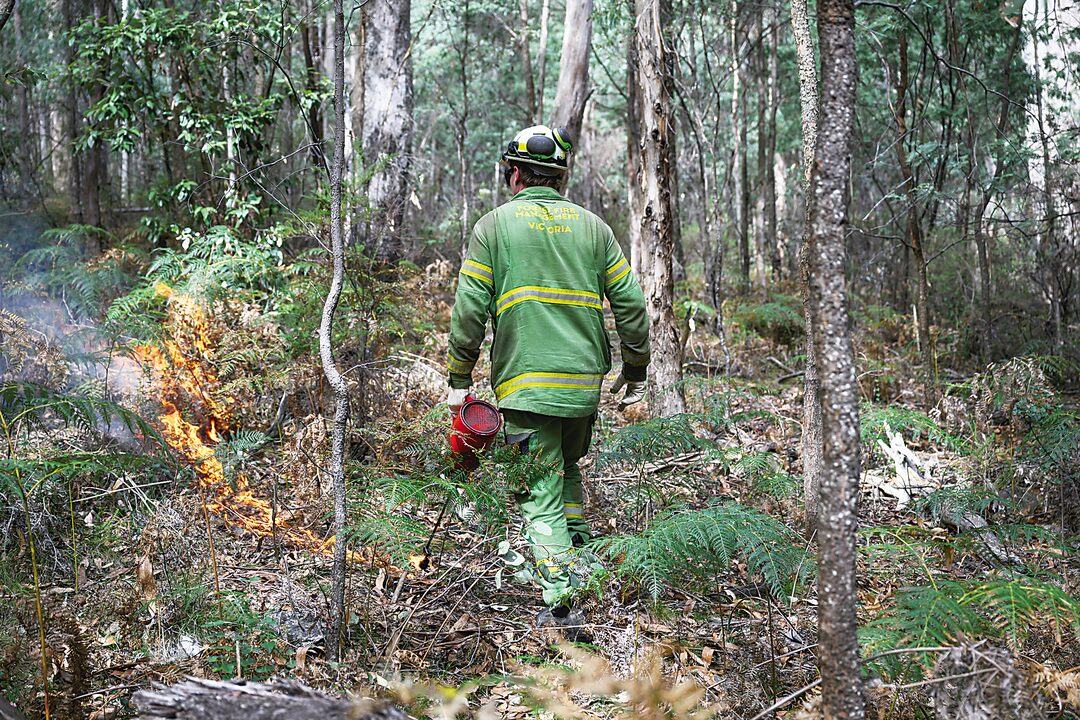
Forest Fire Management Victoria (FFMVic) has been taking advantage of favourable weather and forest conditions across the state to help reduce the risk of bushfires to communities and the environment.
FFMVic deputy chief fire officer Sam Quigley said planned burning was one of the most important tools firefighters use to reduce the size, intensity and impact of future bushfires.
“Reducing fuels like grass, leaves, bark, shrubs and small fallen branches means fires burn less intensely, spread more slowly and are safer for our firefighters to control,” Mr Quigley said.
“Autumn is generally the best time for planned burns because the weather is more stable and fire behaviour is easier to predict.
“As soon as the right weather and forest conditions arrive, we’ll make sure all available crews and resources are out delivering planned burning.”
This year, 97 planned burns covering 81,000 hectares are prepared and ready for ignition across Gippsland. Priority burns have been planned in state forests, parks and reserves around Noojee, Erica, Heyfield and Mallacoota focusing on the places where reducing fuel has the biggest impact on community safety.
This year will also see the reintroduction of low intensity fire into areas affected by the 2019-20 bushfires with several multi-year landscape mosaic burns planned for ignition.
“While planned burning is our most effective tool to reduce fuel–driven bushfire risk, we use many other methods in areas where burning isn’t suitable,” Mr Quigley said.
“This includes mulching, mowing, slashing and spraying, building and maintaining fuel breaks and upgrading the public land road network.
“We work closely with the Bureau of Meteorology to assess humidity, temperature, wind speed and other weather conditions. Burns only proceed when it is safe and conditions are right.”
FFMVic has skilled staff who work across Victoria’s fire and land management agencies. These include the Department of Energy, Environment and Climate Action, Parks Victoria and Melbourne Water.
“We work closely with the Country Fire Authority, Fire Rescue Victoria and Emergency Management Victoria to reduce bushfire risk, prepare communities and respond to emergencies,” Ms Quigley said.
While planned burning does produce smoke, the smoke is usually lower in intensity and shorter–lasting than smoke from a large, uncontrolled bushfire. Communities are notified in advance so people can take steps to reduce their exposure.
Victorians can register for the latest updates about where and when FFMVic is delivering planned burning at plannedburns.ffm.vic.gov.au