Wellington Shire Council has announced changes to its waste service in response to community feedback, including subsidised bins for young families and those with medical or disability needs.
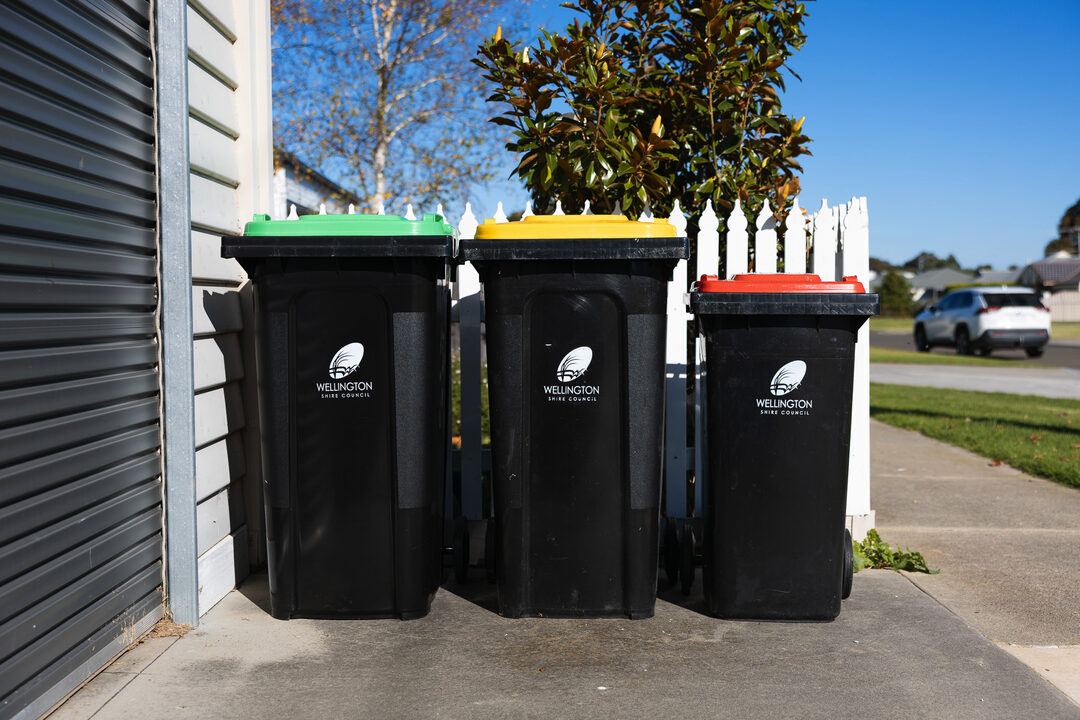
During recent engagement on the waste policy, some residents raised important concerns around medical waste and nappy disposal for young families. As a direct result, council will introduce a new Additional General Rubbish Subsidy, designed to support eligible households with higher waste needs. Under this program, eligible households can apply for a fully subsidised additional 120L general rubbish (red-lidded) bin.
Eligible households include:
- Residents with a medical condition or disability that results in higher volumes of hygiene or medical waste (such as incontinence products), supported by a letter from a medical practitioner, and;
- Families with two or more children under the age of four to help manage nappy waste, supported by documentation such as birth or immunisation records.
Requests can be made by homeowners or tenants, and all applications are subject to council approval. Collection of the general rubbish (red-lidded) bin will continue to be fortnightly.
Households beyond the subsidy program that need more capacity can access an optional user-pay service, ensuring capacity needs are addressed while keeping costs fair for the wider community. This approach means flexibility and extra capacity for individual households who do generate higher amounts of general waste, without putting the cost on the broader community.
The new subsidy will result in a small increase to the proposed kerbside service charge, subject to council’s budget approval process.
Wellington Shire Councillors unanimously voted to accept the proposed changes to council’s waste policy at its meeting on Tuesday night. Wellington Shire Council mayor Cindy Madeley emphasised that the community’s feedback was instrumental to the policy process, and the changes made were a direct result of the engagement process.
“We acknowledge there has been confusion about what this consultation could influence, and it’s clear some people felt their feedback wasn’t heard,” the mayor said.
“The decision to introduce FOGO and move to fortnightly general rubbish were guided by state government legislation and local data. However, the way the service is implemented locally has been shaped by community feedback, and that’s why you’re seeing changes like this new subsidy program.
“While continuing weekly general rubbish collection for everyone would significantly increase rates for all ratepayers, we hope by offering this new subsidy, we’re striking the right balance between supporting those who need it most and keeping costs fair for everyone.”
The mayor acknowledged this system would not suit every household in the same way, but added it was important residents gave the new system a chance.
“It’s designed to work for the vast majority of households, reduce landfill and keep costs down. We encourage residents to take a fresh look at what’s going into their bins, as a few small changes at home can make a real difference for everyone else in the community,” she said.
The Victorian Government has indicated landfilling costs will continue to rise each year, resulting in councils right across the state revising their long-term waste costs. Reducing what is landfilled and diverting through recycling is the most cost-effective approach to help manage long-term waste expenses and reduce pressure on household charges.
FOGO bins have begun rolling out across the Shire, with collection beginning the week of 6 July 2026. Every council in Victoria must roll out FOGO by 2027, according to state government legislation.
For more information or to register for the Additional General Rubbish Subsidy, visit wellington.vic.gov.au/forms/additional-general-rubbish-subsidy-form