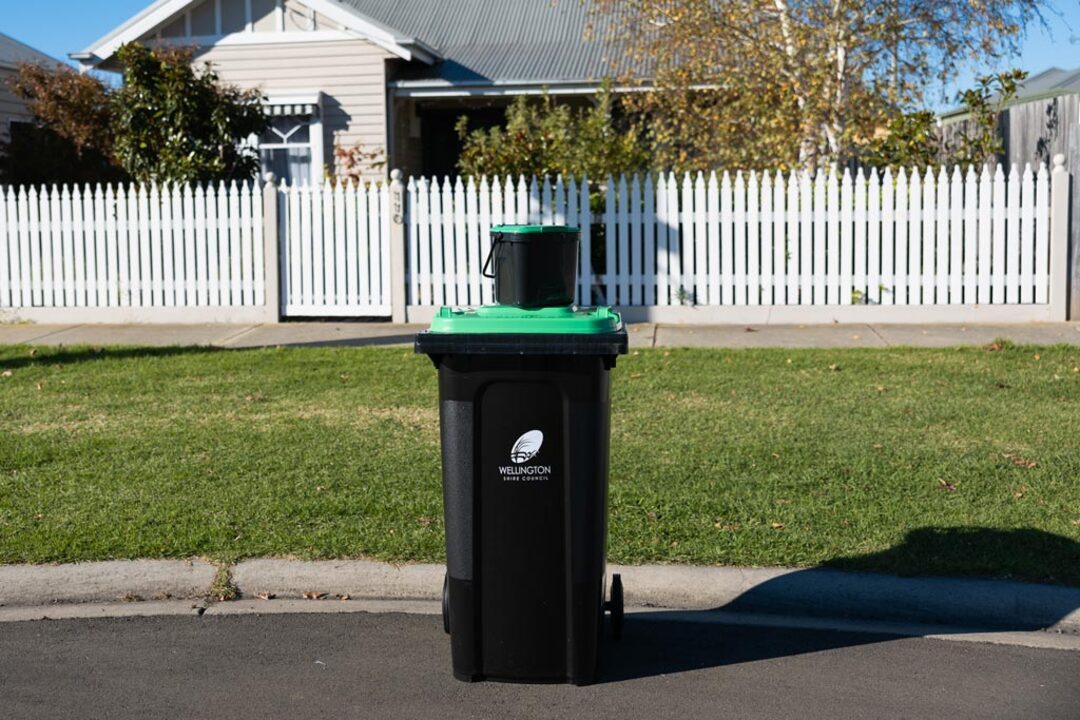
The collection of food organics and garden organics (FOGO) bins will begin across Wellington Shire next month.
FOGO services are beginning in three Gippsland shires – collections in South Gippsland begins on Wednesday, July 1, while they will get underway in Wellington and Baw Baw Monday, July 6.
From this week, residents can start placing their food scraps into their green-lidded bin with garden trimmings, lawn clippings and more
Residents in garbage collection areas should also have a kitchen caddy, which can collect food scraps for emptying into their FOGO bin. People who have not received their kitchen caddy or green bins by the end of June should speak with the council’s customer service team.
An extensive list of what can be placed in FOGO bins can be found on the Wellington Shire Council website, www.wellington.vic.gov.au/environment/fogo
The state government is standardising household recycling across Victoria, which includes the introduction of a four-bin waste and recycling system. The three councils are introducing the FOGO service to meet these requirements.
Bin collection days will not change in the three shires, however, after the first week of July, green-lidded bins will be picked up weekly, and collection of red-lidded general rubbish bin will change to fortnightly.
A factor in Wellington Shire Council’s decision to change to fortnightly collection of general waste was data suggesting more than half of the average household landfill bin consisted of food and garden waste, and a further 15 per cent were items that belong in the recycling bin.
As a point of comparison, in Latrobe City and East Gippsland Shire, general waste is collected weekly, with recyclables and green waste collected on alternating weeks.
Collected food and garden organics will be processed by Pinegro Products in Morwell, transforming waste that would have otherwise been landfilled into valuable compost and soil conditioner.
Baw Baw mayor Kate Wilson said the commencement of FOGO had been a long time coming and this service was an example of councils supporting their residents to make sustainable decisions with their waste.
“We know that everyone’s circumstances are different, and this may feel like a big change for some in our community,” Cr Wilson said.
“FOGO is here now, so it’s time to start thinking about what changes we can make to ensure its success and rethink how we dispose of our waste.”
Wellington Shire mayor Cindy Madeley added how great it was to see three local councils partnering together for such an important initiative.
“We’re really excited to be rolling out FOGO alongside our neighbouring councils,” Cr Madeley said.
“This joint approach has allowed us to share knowledge, streamline services and deliver a stronger, more sustainable waste solution for our communities.”
South Gippsland mayor Nathan Hersey said that while this new service would take some adjusting to, the end goal was what it was all about.
“The new FOGO service will help to reduce waste sent to landfill and provides a way for households to manage food and garden organics,” he said.
“This change will ensure the councils fulfil the state-mandated waste obligations and encourage long-term outcomes that will divert waste from landfill.”
Each council has developed an extensive set of frequently asked questions, which can be found on their respective websites.